
Álvaro Bazán Auza

"UPB has given me a strategic outlook and a broader vision of the business world and of business."
1. Entel is the company that connects Bolivia. How do you live that responsibility?
More than a technical responsibility, I see it as a commitment to the country.
In Bolivia, connectivity is not just a service: it is what allows a person to study, a producer to sell, a doctor to provide better care. So, when we talk about connecting, we are actually talking about opening possibilities.
My approach has always been the same: that Entel S.A. does not think only about coverage, but about real connection that is of quality, reliable, and useful; that it really serves people in their daily lives.
2. We are in an era of accelerated change. How do you imagine Entel in five years?
Rather than imagining it larger, I imagine it differently. The world is changing and telecommunications are no longer just infrastructure. Today, networks are the foundation of the digital economy. Services, businesses, and even ways of organizing the State are built upon them.
Entel has to evolve toward that: becoming a digital transformation platform for Bolivia. Not just connecting, but enabling. Enabling education, health, productivity, public services.
Therein lies the true leap.
3. What is the project you are most excited about today due to its impact on people?
The one we are driving together with the Ministry of Education to expand internet coverage in educational units. Because there you see the direct impact. It is not a technical discussion: it is a child accessing information, a teacher who can teach better, a community that connects with the world.
That kind of project reminds you what all of this is for. It is not technology for the sake of technology, it is the future.
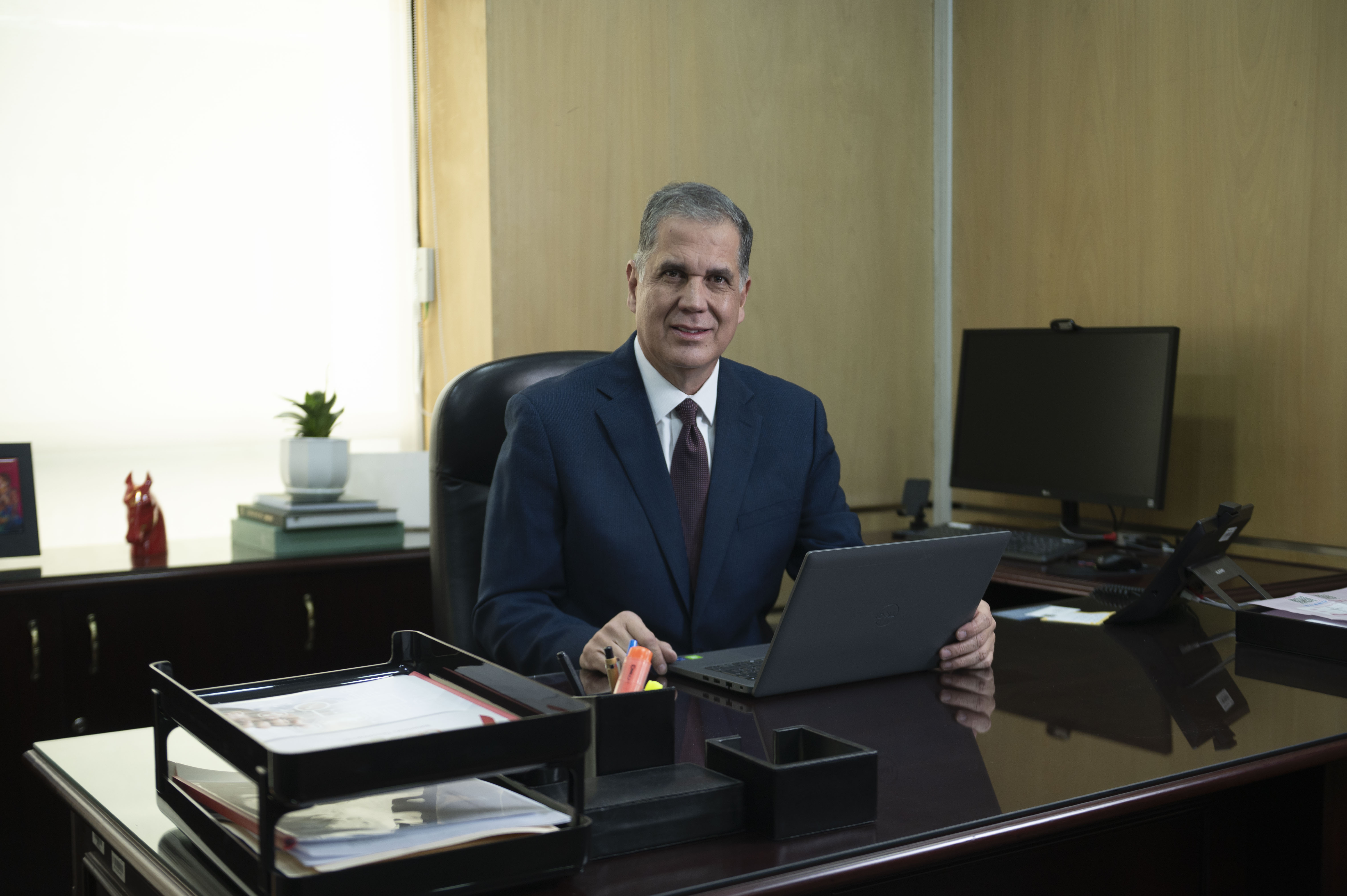
4. How does the Board of Directors manage to balance the financial strength of the company with the constant investment in state-of-the-art infrastructure?
With sound judgment. Entel is a solid company, with good results and a significant equity base. That allows us to invest. But the point is not how much is invested, but in what.
Today more than ever, every investment has to respond to a clear logic: improving the quality of service, generating new capabilities, and sustaining growth over time.
Strategic discipline is what prevents investment from becoming an expense.
5. Where is Entel today in the region and where should it go?
Locally, Entel is a very important player. It has a strong presence and a structural role within the country. But regionally there is still a lot of room to grow. The next step is not just to expand, but to integrate better: generate alliances, connect with new players, participate in larger initiatives.
Today, leadership is not defined only by what you do within your market, but by how you insert yourself into the ecosystem.
6. In such a technical sector, how does Entel foster the retention of young Bolivian talent to boost internal innovation?
First, by being competitive. Not only technically, but also economically.
But that is not enough. You also have to build prestige. That working at Entel is seen as something relevant, as a place where important things happen, where one can grow and contribute.
Young talent seeks challenge, impact, and room to do. If the organization offers that, the talent stays.
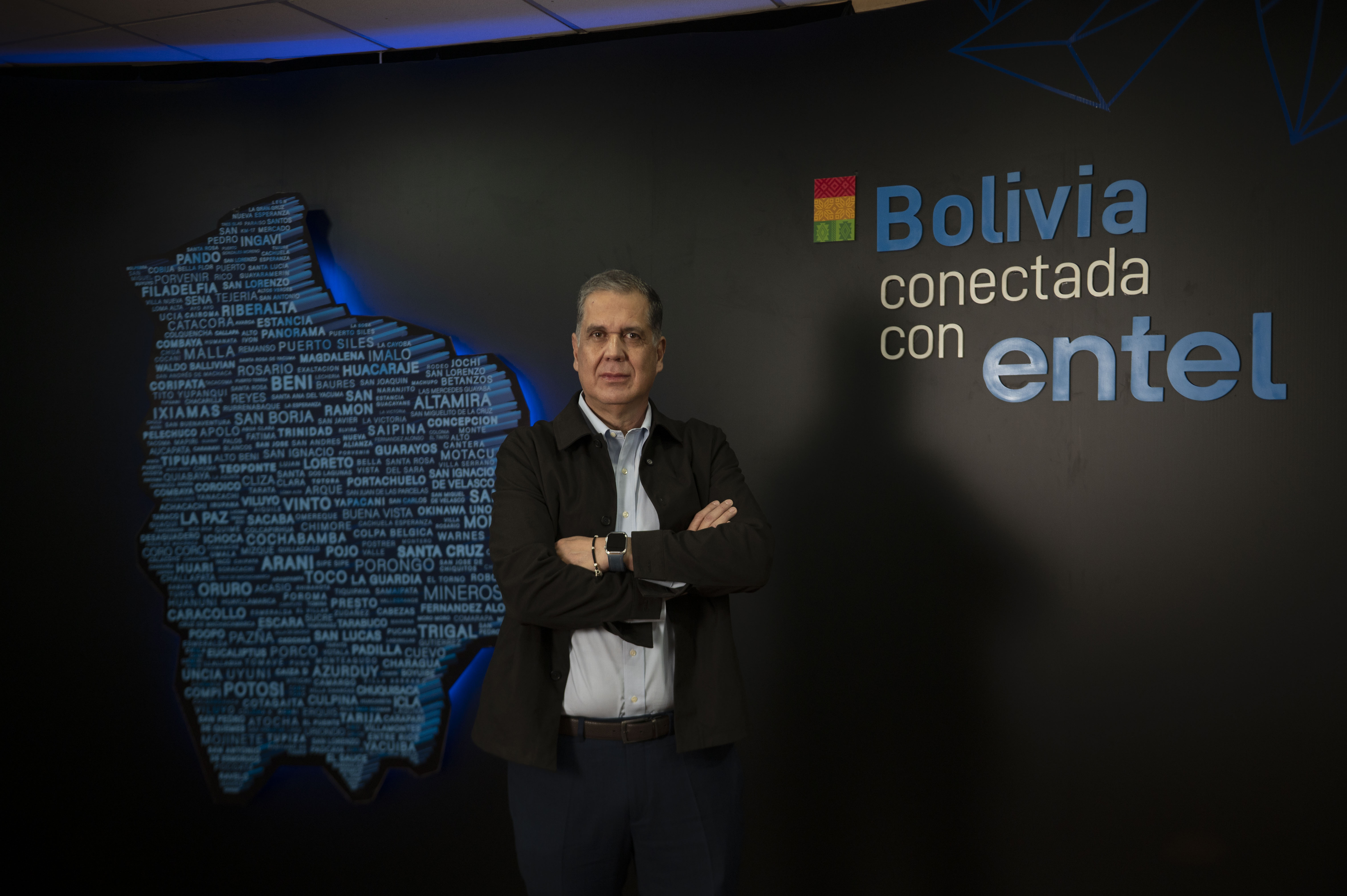
7. As a graduate of UPB, what is that value or principle learned that you apply today as a fundamental pillar in the presidency of the Board of Directors of Entel?
The strategic outlook.
Understanding that the business world is much broader than it seems and that decisions are not made in isolated compartments. Everything is connected: technology, finance, regulation, society.
That ability to see the whole picture is what allows for better decision-making.
8. What advice would you give to UPB students and graduates who aspire to lead high-impact institutions for the development of Bolivia?
That they believe in Bolivia, that they prepare themselves well, that they have a global outlook, but that they understand that there are enormous opportunities here.
It is not about leaving to do important things. It is about being prepared to do them here as well.
Bolivia is a complex country, yes, but it is also a country where there is still much to build. And that, in reality, is an advantage.
