
Daniel Cornejo
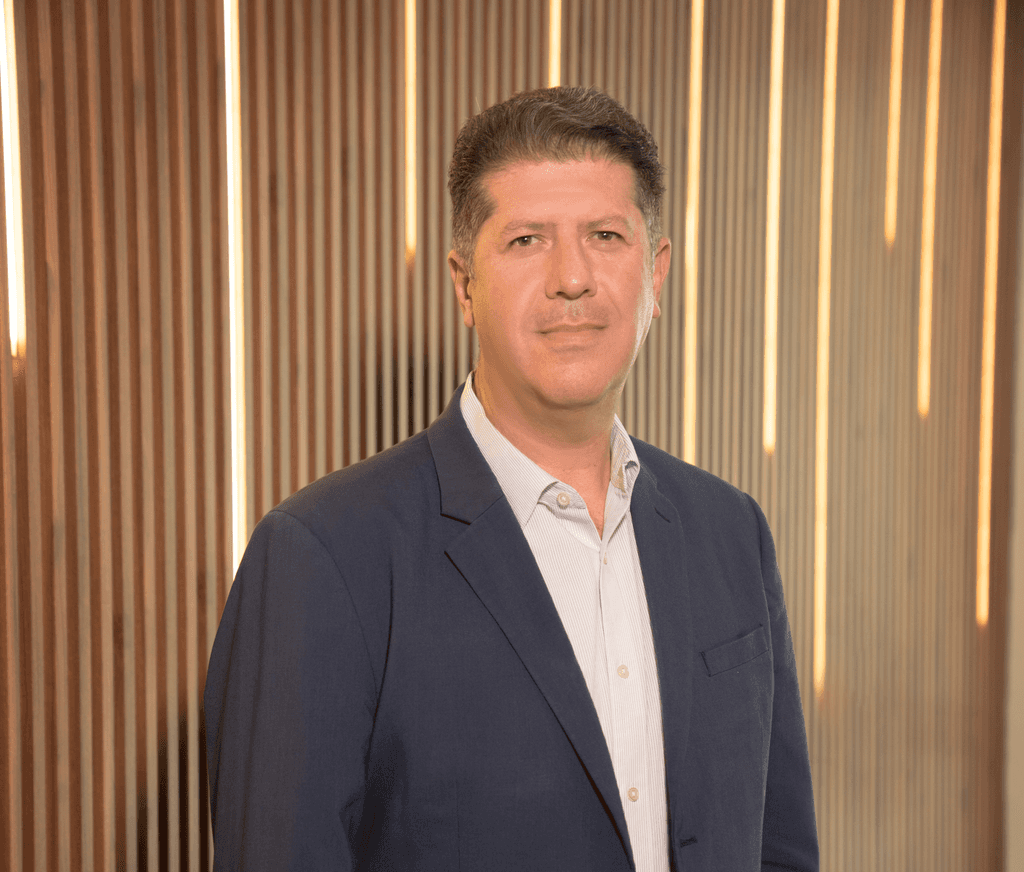
Watch full interview
“Technology will take care of the mechanical, pushing us to be exceptionally more human and strategic.”
Google represents one of the most competitive and influential professional environments in the world. What decisions, skills, or key moments led you to become part of that ecosystem?
The key moment came in 2021 after a several-year career at another technology multinational.
It was there that I clearly saw the profound change that Cloud, Data, and Artificial Intelligence technologies were generating in the market, and Google's unique potential to lead this new technological era. That vision made my decision to make the leap extremely easy.
I believe that what also brought me to Google was having developed the capacity for reinvention: the ability to move from traditional technology to understanding and articulating the strategic value that artificial intelligence and data bring to businesses today.
AI is forcing many people to look at their professional future with new questions. From your experience, which careers or capabilities are exposed, and which will continue to be deeply human and valuable?
From my personal experience and as part of Google, we see AI not as a replacement, but as a strategic ally that elevates our potential.
The capabilities that are exposed today with this development are all those that are mechanical, repetitive, and predictable. If a task consists simply of processing data or following fixed rules, it will be automated.
On the contrary, I believe that what will remain deeply human and of extremely high value is that which technology cannot replicate:
Critical and ethical thinking: AI gives us the answers, but we must ask the right strategic questions.
Empathy and leadership: Building trust and the valuable relationships we build over time are irreplaceable.
Adaptability: The willingness to continuously unlearn and learn.
The challenge for universities is no longer to teach how to process information, but to train professionals with sharp critical thinking and the empathy necessary to lead change. AI will take care of operational complexity; it is up to us to focus on the strategic purpose.
In technology, there is a lot of talk about innovation, but in the region there are also gaps, fears, and inequalities. What do you think Latin America needs to stop consuming technology and start creating it?
This is an urgent challenge in the region. For Latin America, and especially our country, to stop being a consumer and become a creator of technology, I believe that cloud technologies and services are the great equalizer of opportunities. I believe these three concrete actions could help this purpose:
Democratize knowledge: Today, a student in Bolivia has access to the same infrastructure, technology, and AI capacity as an engineer in Silicon Valley or a first-world country. The gap is no longer physical or a lack of access to technology, but rather specialized training to design solutions, not just operate them.
Solve local pain points: We must not just copy external solutions. The real value lies in using technology to solve problems specific to our region: agriculture, financial inclusion, logistics, among others. I believe our creativity in the face of adversity is our greatest advantage.
Create intellectual property: We need to connect academia, the private sector, and young talent to develop scalable local technological solutions with an export mindset.
Technology is already available to everyone. The challenge now is to train and empower the human talent we have to move from user to creator.
Your career has spanned telecommunications, data centers, cloud, analytics, artificial intelligence, and digital transformation. What was the professional leap that most forced you to reinvent yourself?
The definitive leap that forced me to reinvent myself was learning about the world of Data and Artificial Intelligence. This forced me to break a paradigm: understanding that value is no longer in storing information, but in using data as the most powerful strategic asset for real-time business decision-making.
Reinventing myself at this stage meant going beyond the technology trend and learning to decipher the true value of AI through concrete use cases applied to business processes. It was the crucial step that allowed me to stop focusing on selling technology and start selling strategic solutions that transform companies.
Many times we see major roles from the outside, but we don't see the decisions, sacrifices, or difficult moments behind them. What part of your professional path shaped you the most as a person and professionally?
This path has required constant study and updating to remain relevant and develop new capabilities, in addition to difficult decisions such as leaving Bolivia to pursue my master's degree abroad, working in several countries, and adapting to living far from my family.
Being far from my roots forced me to develop capabilities such as resilience. Professionally, I believe this experience gave me a more global vision and the versatility to move in different environments; personally, it taught me to value time with my loved ones and to lead with greater empathy.
In your view, is technology replacing human capabilities or is it forcing us to develop deeper capabilities?
Without a doubt, it is forcing us to develop much deeper capabilities.
Technology does not replace us; it simply automates the routine and predictable. By freeing us from that operational burden, it forces us to enhance what no algorithm can replicate: our critical thinking to guide technology, empathy to build relationships of trust, and constant adaptability.
In summary, technology will take care of the mechanical, pushing us to be exceptionally more human and strategic
What human quality is indispensable to lead in an industry where everything changes so fast?
The indispensable quality is adaptability driven by continuous learning.
In an industry that changes daily, the value of a leader is no longer having all the answers, but the humility and agility to constantly unlearn and learn.
How do you gain credibility when you represent a global brand like Google, but work with very different local realities?
The global brand opens the door for you, but credibility is earned by developing empathy, trust, and long-term relationships.
The secret lies in translating world-class solutions and technology into the specific pain points of the local business. This involves sitting down with the client, understanding their real market and economic limitations, and co-creating strategies that make sense in their context.
In short: the Google badge provides the backing of the brand, but it is your ability to understand and respect the client's reality that truly builds long-term trust.
What do you consider was the most valuable contribution of UPB to your education and your way of leading in the professional world?
Without a doubt, I believe that UPB's greatest contribution was providing me with the foundations of systems thinking and structured problem-solving.
Throughout a career of more than 20 years, and during my time at leading technology companies, I have seen the entire ecosystem transform on multiple occasions. However, that analytical capacity that the university helped me forge is precisely what has allowed me to adapt to constant change and perform my duties successfully
INSIGHTS:
A book or movie that left a mark on you: More than just a single book, I like to learn and read biographies of visionaries who transformed the world in different eras, the last three I read are those of Steve Jobs, Elon Musk, and Albert Einstein. From them, I like to learn about curiosity, resilience, and the audacity to challenge the status quo. Seeing how they managed pressure and turned abstract ideas into realities inspires me to develop my work.
A person you deeply admire: I deeply admire my parents, Gastón Cornejo and Teresa Reyes. Beyond their unconditional love that they gave me in life, they have been my greatest examples of self-improvement, determination, perseverance, and resilience. From them, I inherited the fundamental values that define me today: empathy, the discipline of continuous improvement, and a deep love for family and work. Their example is the foundation of how I face challenges and how I lead in my day-to-day life
A phrase or principle that guides your life: The principle that guides my way of working and making decisions is summarized as the real value is not in the transaction or sale, but in the relationship. In all these years of my career, I have learned that sustained success is not based on closing a specific deal, but on building long-term relationships. To achieve this, the most important pillar is respect for the client and for the person. In every decision I make, I always seek to build "win-win" agreements; because when you genuinely focus on your client's success, trust is consolidated and the business endures over time.
Your most precious asset: My most precious asset is my family, my wife Lorena Grundy, my children Daniela and Juan Diego, and especially the time to be present and share with them. After more than 20 years of career, I know that technology and projects come and go, but time with them is unique; it is where I find the true inspiration to keep growing
A fear that you have learned to transform or that has left you with a lesson: The fear of expressing myself in another language, competing internationally, and having to fit into cultures and countries different from my own. I transformed that fear into curiosity, respect, and determination. This process left me with a vital lesson for my career: it showed me that to successfully compete in business, the most important factor is human trust. Learning to interact in diversity gave me the confidence to perform successfully in different countries and environments.
