
Lykke E. Andersen, Ph.D.
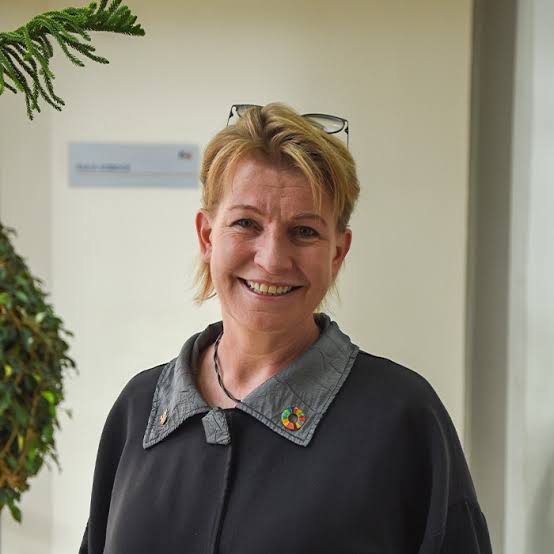
“Bolivia has all the ingredients to build its own path to sustainable development without copying external models.”
1. Based on your more than 25 years of experience, what do you consider to be your most critical finding about sustainable development in our country?
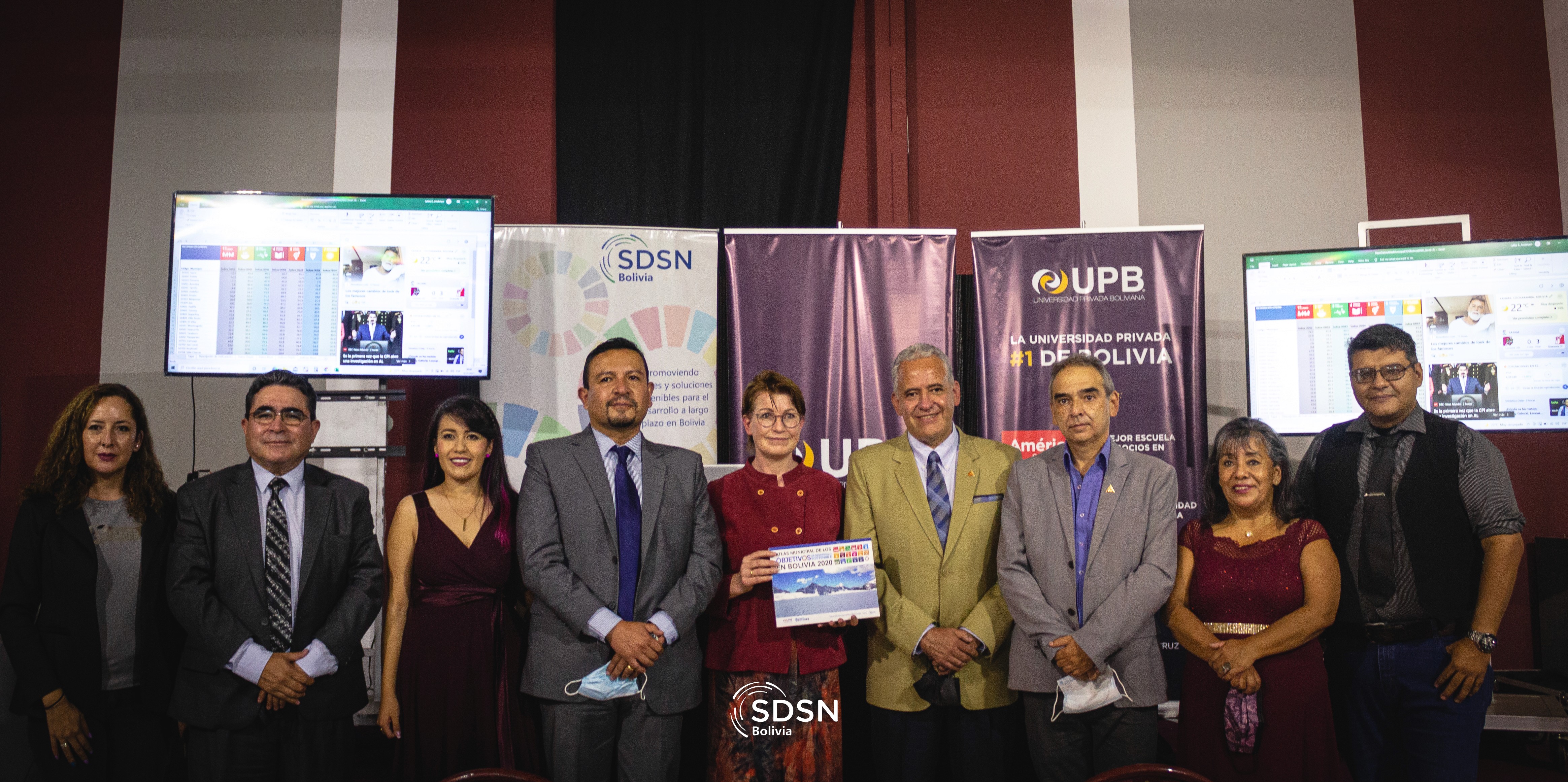
One of the first initiatives we promoted after establishing the Sustainable Development Solutions Network (SDSN) in Bolivia in 2018 was the preparation of the Municipal SDG Atlas in Bolivia 2020.
This detailed diagnosis of the situation of each municipality at the beginning of the 2030 Agenda was something truly unprecedented: for the first time, it was possible to observe the country's situation with an unprecedented level of territorial detail.
The Atlas allowed us to see Bolivia almost as if it were a mosaic: territories with huge challenges, but also with extraordinary opportunities.
One of the most interesting findings was identifying tourism as one of the sectors with the greatest potential to drive sustainable development. Bolivia possesses an extraordinary combination of biodiversity, landscapes, and living cultures. If we manage to turn that wealth into responsible and well-managed tourism experiences, tourism can be transformed into one of the most elegant forms of sustainable development: generating income while conserving what makes the country unique.
2. Given your work in the Tourism Roundtable, how can this sector become the engine of a more inclusive and sustainable economy in La Paz?
Tourism has something very special: it converts diversity and uniqueness into economic value.
It is a sector that generates opportunities for people with very different profiles. From drivers, cooks, hoteliers, and artisans, to highly specialized guides in areas such as bird watching, mountain climbing, or wellness tourism in the Amazon. This means that the benefits of tourism can be distributed among hundreds of thousands of people with different levels of training.
Furthermore, nearly 75% of tourism employment is held by women, making it an important driver of female economic inclusion.
Another key advantage is that the sector is mainly driven by private initiative. The state's role is rather to facilitate, coordinate, and ensure good conditions for the development of the sector, without the need for large public investments. In the current economic context of the country, this is especially relevant.
The department of La Paz is already the main tourism hub of the country, generating approximately 33% of the national tourism GDP. Its greatest strength is its natural diversity: within a few hours of travel, you can go from Andean peaks of over 6,000 meters to extraordinarily biodiverse Amazonian rainforests, like the Madidi National Park.
Few places in the world offer such diversity in a relatively compact territory. Well-managed, this natural heritage can turn La Paz into one of the great destinations for nature and adventure tourism in South America.
3. From the SDSN Bolivia network, how do you visualize the role of the UPB in achieving the Sustainable Development Goals for the next decade?
Universities have a fundamental mission: to train the people who will make the decisions of the future.
The role of the UPB is to prepare leaders capable of transforming sustainable development from an aspiration into a concrete reality. That requires not only academic excellence, but also social awareness, critical thinking, and a long-term vision.
Bolivia needs leaders who do not measure success solely in terms of income, but also in terms of positive impact on society and on the planet.
If we manage to train professionals with that combination of capability and purpose, universities can become one of the most powerful engines of sustainable development.
Bolivia does not need to copy development models from other countries. It has all the ingredients to build its own path: an extraordinary nature, living cultures, and a new generation of talented young people who can transform that potential into a sustainable future.
4. As a Full Professor at the UPB, how do you transfer your experience at the frontier of global knowledge directly to your students' learning?
I deeply believe in the principle of “learning by doing.” Knowledge becomes truly powerful when it is applied to solve real problems. That is why we encourage students to participate in internships within SDSN Bolivia, where they integrate directly into ongoing research projects.
In this process, they learn methodologies, data analysis, and critical thinking, but they also experience something very important: how knowledge can contribute to improving society.
Even within my courses, I try to design assignments and evaluations that contribute directly to real research projects. In this way, students do not just study theoretical problems: they actively participate in building solutions.
5. Economics and research are still often perceived as predominantly masculine fields. From your leadership position, what structural barriers persist and how have you managed to consolidate yourself as an international reference?
I think that perception is changing faster than many people imagine. In the economic research centers where I have worked in Bolivia —such as IISEC, the INESAD Foundation, and now SDSN Bolivia— today we find women in leadership positions.
In my experience, I have not encountered significant structural barriers in the educational system or in the Bolivian labor market. Currently, 135 women graduate for every 100 men from universities in Bolivia (see the book Luz entre Sombras, p. 86), and on average they graduate with better grades and more distinctions. Young women in Bolivia are already very well prepared.
The main challenge usually appears when balancing a professional career with family life, especially during the years when many women decide to have children. However, in Bolivia that challenge can be more manageable than in other countries thanks to family networks and the possibility of having domestic support.
Ultimately, I believe that talent and perseverance end up opening paths.
6. How does the UPB research ecosystem empower academic solutions to become public policies for Bolivia?
One of the great strengths of research at UPB is its strong orientation toward applied research.
Many projects arise from concrete questions posed by public institutions, international organizations, or private sector actors. This creates a natural bridge between academia and decision-making.
When research is born from real problems, it is much more likely that its results will turn into public policies, business strategies, or social innovations.
Academia can thus fulfill one of its most important roles: transforming evidence into action.
7. What message would you give to young female researchers at the UPB who aspire to break the “glass ceiling” in economic sciences?
Many times the so-called “glass ceilings” exist more in our own perceptions than in reality.
Outside my office at the UPB, there is a poster above the climbing wall that says: “El cielo es el límite”. And I really believe in that idea.
But I also believe that the goal in life is not necessarily to reach the highest positions. The most important thing is to build a life that is intellectually stimulating, purposeful, balanced, resilient, and also fun.
When one finds that balance, professional impact usually comes as a natural consequence.
