Milan Yaksic
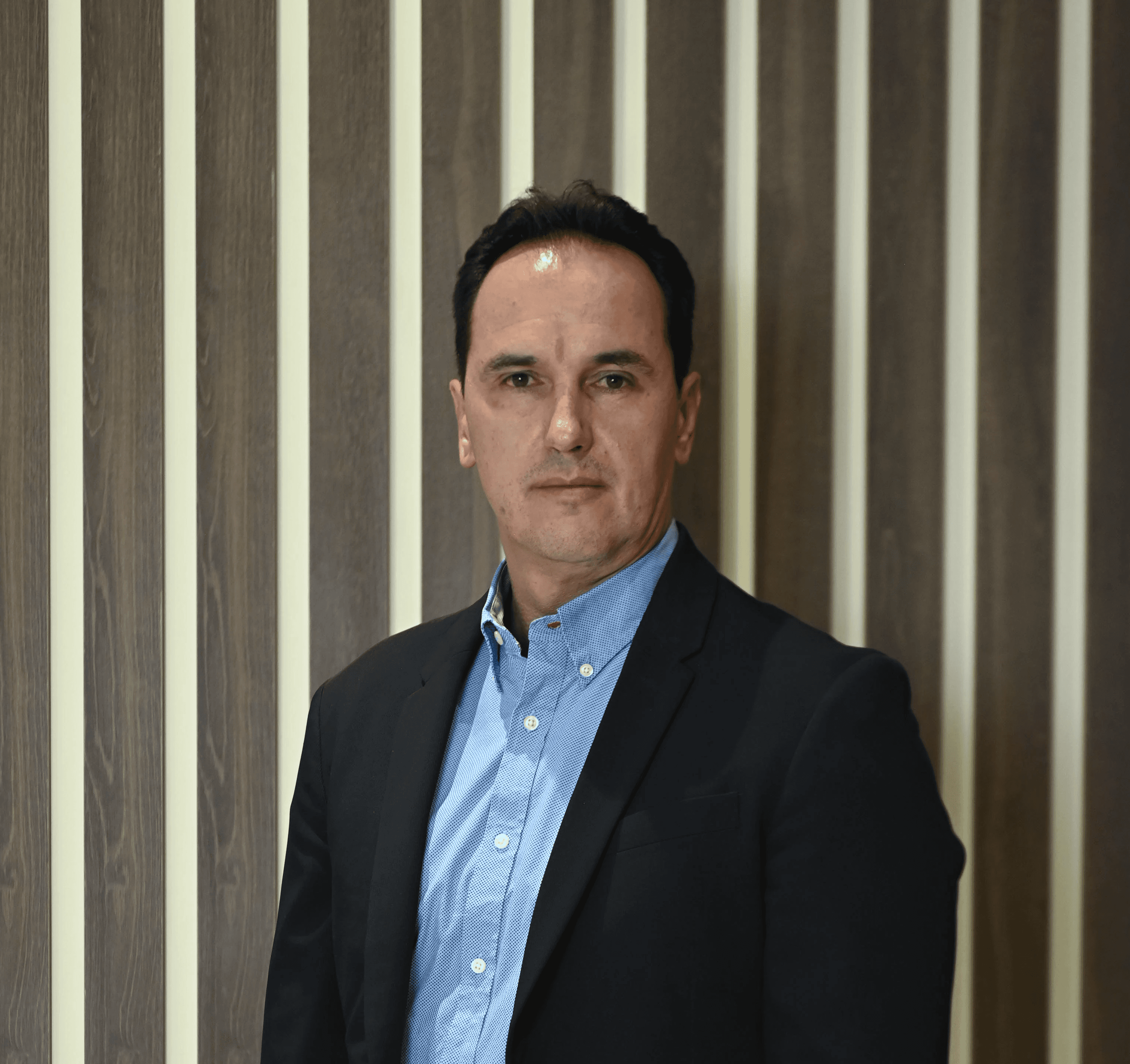
“Sustainable results are built with discipline, quality, and the right decisions every single day.”
Leading production at Droguería INTI carries a huge responsibility. What do you consider to have been the greatest challenge of taking over the Plant Management, and how do you manage to maintain the highest quality standards day by day?
The biggest challenge has been achieving the balance between operational efficiency and rigorous compliance with quality standards. In the pharmaceutical industry, there is no margin for error: every decision directly impacts people's health.
To maintain high standards, we work on three pillars: well-defined processes, a quality culture within the team, and permanent control based on data. But, above all, on the daily discipline of doing things right, even when no one is watching.
In an industry as rigorous as pharmaceuticals, efficiency and continuous improvement are vital. How do you foster innovation within your production team without compromising the safety and tradition of such a well-established brand?
Innovation in the pharmaceutical industry cannot be disruptive without control; it has to be structured.
In the production area, we foster continuous improvement through small, sustained changes: process optimization, use of technology, and data analysis. Every innovation undergoes technical validation, regulatory compliance, and permanent coordination with the quality department.
The goal is not to change for the sake of change, but to improve without compromising quality or the trust built over years.
In terms of technology, we always keep up to date through our partners abroad and by participating in the most important international trade fairs, with the aim of implementing guaranteed and proven solutions.
As an alumnus of Production Engineering at UPB, which is a fascinating but extremely broad career (logistics, manufacturing, quality, finance, etc.), how did you manage to find your direction and decide that your path lay in the pharmaceutical industry?
Production engineering is very broad, and at the beginning, one does not have total clarity on which path to take; sometimes, it depends a lot on the opportunities found along the way.
In my case, the path was defined in practice, facing real problems. The pharmaceutical industry attracted me because it combines technical complexity, social impact, and a high level of demand.
There I found an environment where I could develop professionally and, at the same time, contribute to something bigger.
Leading production for a giant like INTI requires very solid foundations. In what way do you think the level of demand and the comprehensive training at UPB gave you the necessary foundation to succeed and take on top management responsibilities?
UPB gave me a comprehensive education from the technical to the organizational aspects, but above all, it instilled discipline in me.
Beyond technical knowledge, it teaches you to structure problems, to analyze with criteria, and to sustain a constant level of demand. This is key when you assume roles of responsibility, where decisions have a real impact on the organization.
The job market for engineers is increasingly demanding. Looking back on your time at the university, what do you consider to be that key tool, knowledge, or approach you learned at UPB that gave you a real competitive advantage over other professionals in your field?
The biggest advantage was learning to think in a structured way.
In production, problems do not arrive in an orderly fashion. The ability to break down a situation, analyze causes, and make decisions based on data is what truly makes a difference.
What practical advice would you give a recent graduate to help them discover their true vocation within such a broad field?
My recommendation is simple: do not look for the perfect job at the beginning, look to learn. The path is defined by working, facing real problems, and understanding in what kind of environment you generate the most value. The important thing is to start, observe, and adjust.
Even for those with a strong entrepreneurial spirit, it is necessary to learn the day-to-day of a project before executing your own to ensure success.
What do you consider to be that soft skill that young engineers forget to develop but is crucial for professional growth?
Without a doubt, communication. An engineer can have an excellent technical analysis, but if they cannot align teams, transmit ideas, and generate commitment, the impact is limited.
At a managerial level, the ability to influence and coordinate is just as important as technical knowledge.
Looking back and seeing everything you have built so far, what fundamental life lesson would you like to share with our community?
I would tell them to have patience and focus. Important results take time, and professional growth is not linear. The important thing is to maintain consistency, learn from each stage, and not lose sight of the long-term goal.
If you had to summarize your philosophy of work, leadership, and production in one single short phrase, what would it be?
Sustainable results are built with discipline, quality, and the right decisions every single day.
ABOUT YOU:
A book or movie that has made an impact on you: A book that made a significant impact on me was Good to Great. It made me see that truly important results do not come from strokes of luck, but from doing things well every day, with discipline and consistency.
A person you deeply admire: I deeply admire people who work well in silence, without seeking recognition, but who are always there when they are needed.
In day-to-day life, those kinds of people are the ones who truly sustain an organization.A phrase or principle that guides your life: “The difference between doing something and doing it really well is often just 10 more minutes.” It is something I try to apply every day, both at work and personally.
Your most precious asset: Without a doubt, family… it will always be the engine that most motivates a person in times of crisis. But if I look at it from a more general perspective, time. Because it is the only resource that cannot be recovered, and how we use it ends up defining both our results and our lives.
A fear you have learned to transform: The fear of thinking differently. Of proposing new ways of doing things, of questioning the established, or of asking when something does not seem right. Over time, I understood that this kind of discomfort is necessary. Many times, that is where real improvements begin. Today I try not to avoid it, but to use it as an impulse to analyze better and contribute with criteria.
